
This project started as a Google UX Design Certificate case study. Revisited, refined, and rebuilt — with AI-assisted research, a clearer problem framing, and a deeper commitment to the communities it serves.
Goal
Local Fresh expands access to fresh, healthy food by connecting underserved Southern California communities with mobile markets.
Summary
Local Fresh connects underserved communities with mobile markets that bring fresh food closer to home—making healthy food easier to access and more affordable.
Initially, I believed the challenge was helping people find fresh food. A deeper problem emerged: reducing the friction between people and the community resources already available to them. This insight became the foundation for the product decisions that followed.
Fresh produce was consistently desired, but time, transportation, and affordability often put it out of reach.
Finding mobile markets was another barrier.
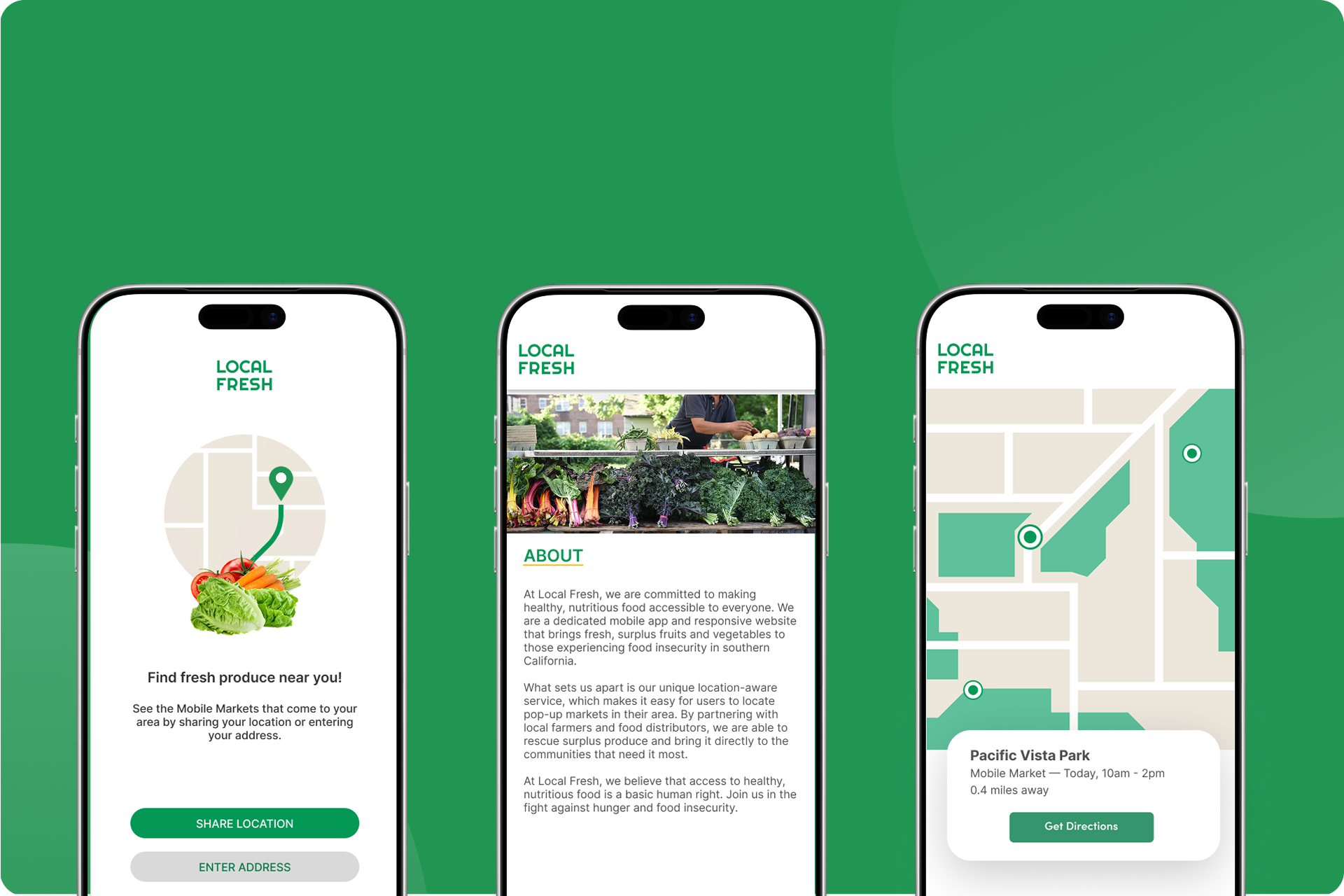
Mobile markets bring fresh food into underserved communities, but awareness is limited. Language and digital access can create additional barriers to finding reliable information.
People needed a simple way to know when and where markets are available—and how to reach them.
Usability testing and recent Southern California research reinforced the need for a location-aware experience built around where people already live and travel.
AI helped accelerate synthesis—not make the decisions.
AI was used to organize secondary research, identify recurring patterns, and challenge assumptions from the original case study. Findings were reviewed and translated into product decisions through designer-led analysis.
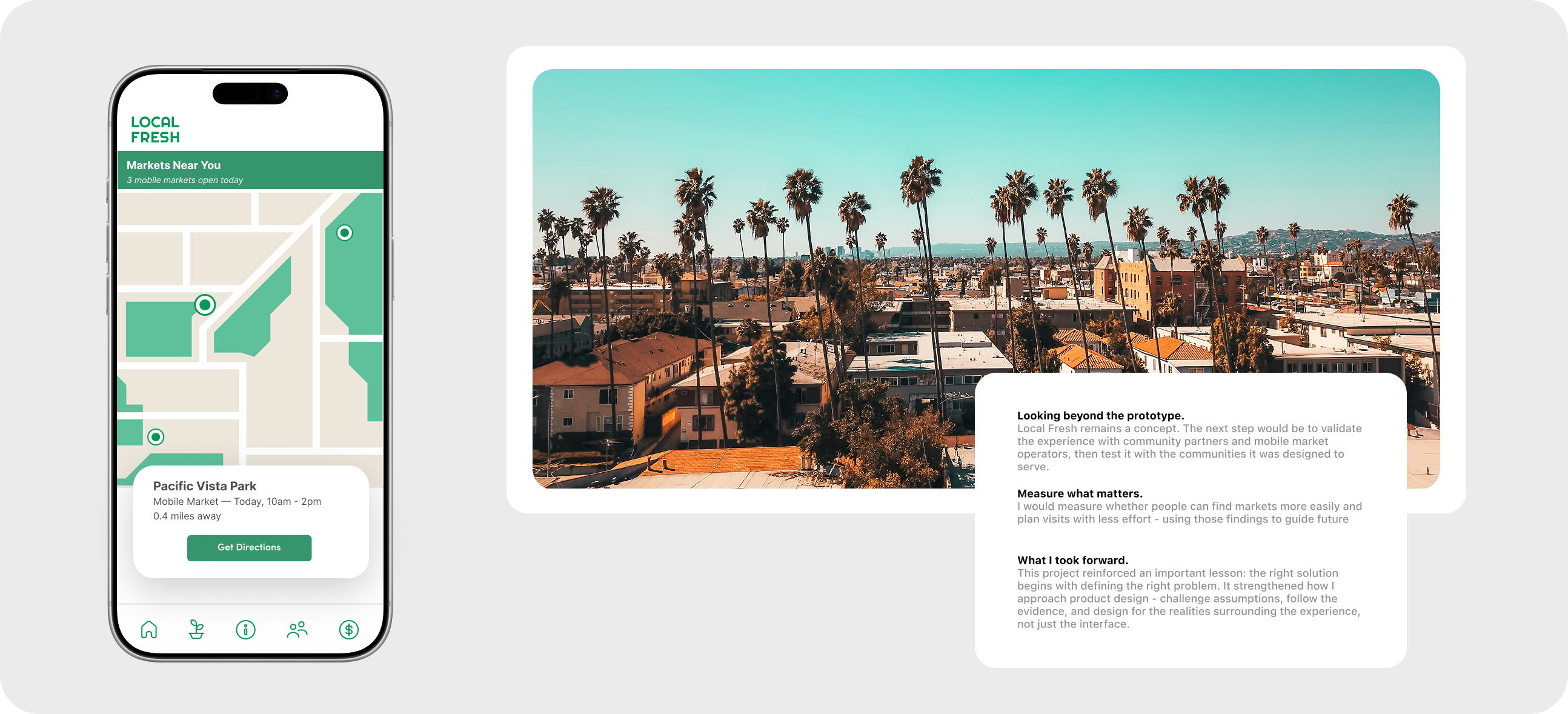
A location-aware experience brings discovery, market details, schedules, directions, and notifications together—helping people move from finding a market to planning a visit.
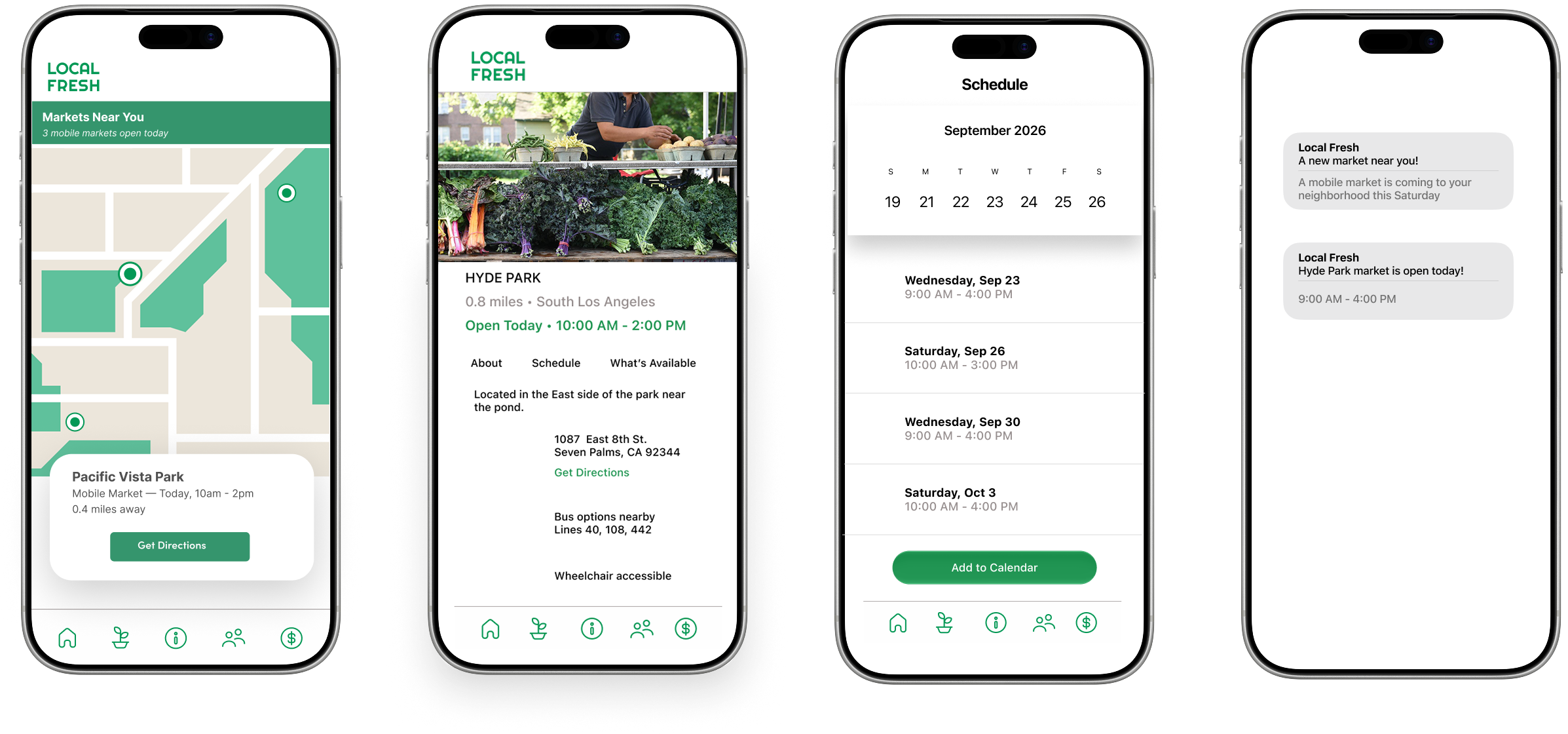
The experience, end to end.
A location-aware experience brings discovery, market details, schedules, directions, and notifications together—helping people move from finding a market to planning a visit.
Revisiting Local Fresh four years later with updated research challenged some of my original assumptions.
What began as a project framed around food deserts evolved into a broader understanding of access—how time, transportation, affordability, and awareness shape whether fresh food is realistically within reach.
The process reinforced an important lesson: the right solution begins with defining the right problem.
Looking beyond the prototype.
Local Fresh remains a concept. The next step would be to validate the experience with community partners and mobile market operators, then test it in the communities it was designed to serve.
I would measure whether people can find relevant markets more easily, plan visits with less effort, and successfully reach those resources—using those findings to guide the next iteration.
What I took forward.
Revisiting the project strengthened how I approach product design: challenge the original framing, follow the evidence, and design for the realities surrounding the experience—not just the interface.