
Overview
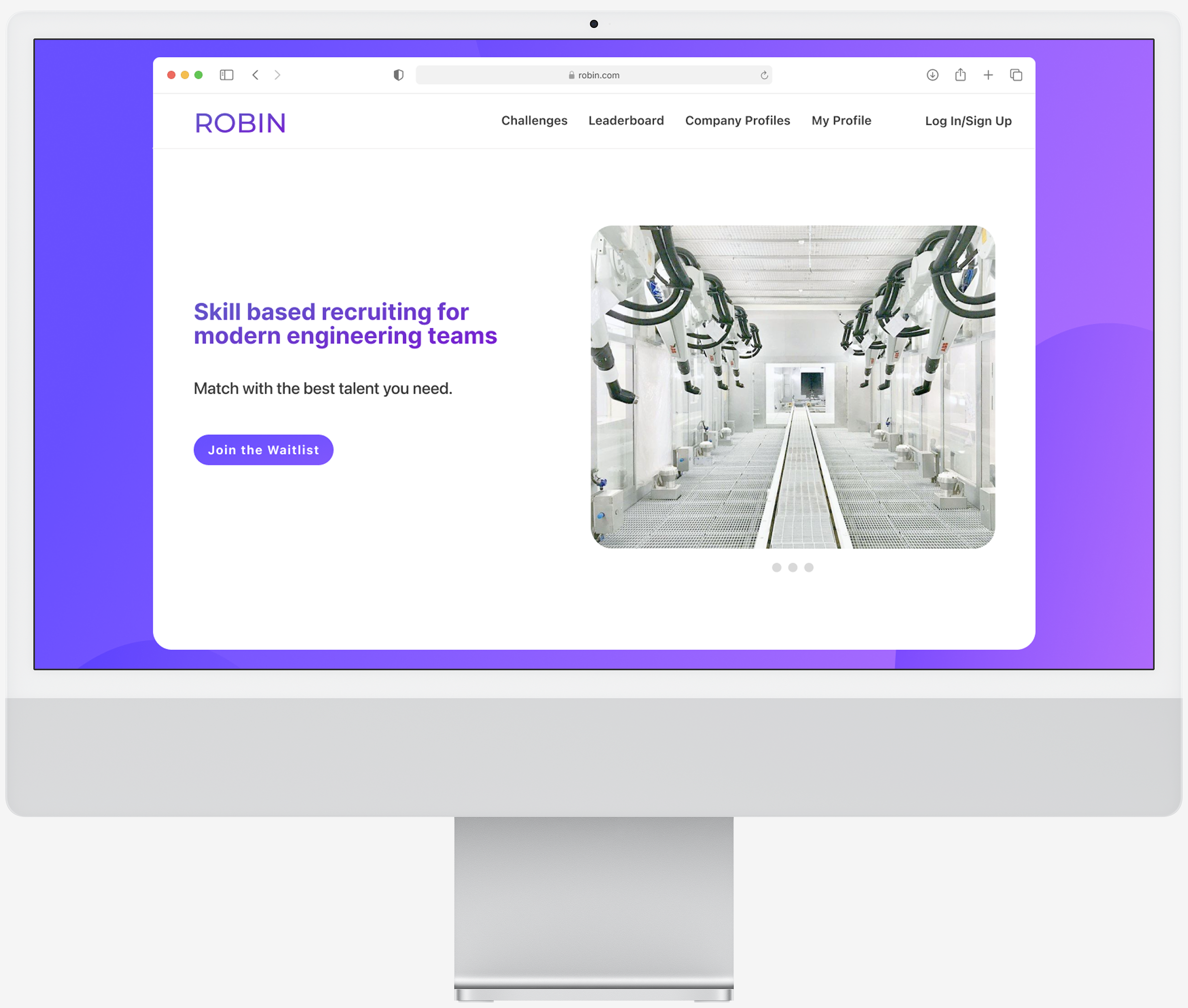
Skill-based recruiting for modern engineering teams
Robin is a recruiting platform concept that enables engineers to showcase real-world abilities through practical assessments, allowing recruiters to evaluate demonstrated skills instead of relying primarily on resumes.
As Lead Product Designer, I led product strategy, UX, visual design, prototyping, and design systems for an eight-week Lean UX engagement. The work explored how practical assessments and skill visualization could improve matching quality while creating a more engaging hiring experience for both candidates and recruiters.
Product Goal
Design a platform that helps recruiters identify qualified engineering talent faster while giving candidates meaningful ways to demonstrate their abilities through practical assessments instead of static resumes.
Success would be measured through:
- Higher recruiter confidence
- Increased candidate engagement
- Stronger candidate-company matching
- Reduced screening effort

Opportunity
Sourcing technical talent is difficult
Talent that could excel on the job is often overlooked. Traditional platforms prioritize resumes, keywords, and past employers over demonstrated ability — Robin bets on evidence instead.
I joined the project after initial user research had already been conducted, and led everything from there: synthesis, concept, information architecture, UI, visual design, and a clickable prototype.
Robin is a recruiting platform that lets tech candidates prove their skills through practical assessments — coding challenges, hackathons — instead of relying on a resume.
This presented an opportunity to shift hiring from credential-first evaluation toward demonstrated capability through practical assessments and skill visualization.
Traditional Recruiting
- Resume and keyword-first screening
- Past employers signal credibility
- Strong candidates get filtered out early
- Recruiters interview before validating skill
Robins Bet
- Resume and keyword-first screening
- Past employers signal credibility
- Strong candidates get filtered out early
- Recruiters interview before validating skill
Where I started
I joined the project after initial user researchhad already been conducted. The researchhanded to me showed that candidates oftenfelt overlooked despite having strongtechnical skills, while recruiters struggled toefficiently identify qualified talent amonglarge applicant pools.
What I led from there
Synthesis, concept direction, information
architecture, UI, visual design, and a full
clickable prototype — turning the inherited
research into a shippable product point of
view.

Research Insights
Research revealed three recurring themes.
- Candidates struggle to stand out.
Many talented engineers felts resumes failed to communicate practical ability. - Recruiters spend significant time validating skills.
Recruiters needed better signals before investing time in interviews. - Job searching lacks engagement.
Recruiters needed better signals before investing time in interviews.
"My resume may not be perfect, but if I could showcase my skills somehow, I couls really stand out." -- Tech Applicant
User interviews with applicants and recruiters had already been conducted before I joined. I worked from that raw research — plus a competitive audit I ran of job platforms... to identify where existing platforms fell short... From synthesis, two core users emerged
Time-related challenges and complexities in the job application process were shared experiences for both the tech applicant and the recruiter.
Underneath all three was the same root problem: neither side had a reliable way to spend their time well. Applicants couldn't tell where their effort would land. Recruiters couldn't tell which applicants were worth their time.
The research given to me showed that candidates often felt overlooked despite having strong technical skills, while recruiters struggled to efficiently identify qualified talent among large applicant pools.
Candidates struggle to stand out
Many talented engineers felts resumes failed to communicate practical ability.
Recruiters spend significant time validating skills
Recruiters needed better signals before investing time ininterviews.
Job searching lacks engagement
With no clear signal of progress orfit on either side, the searchbecame repetitive and low-feedback for both users.


Design Principles
Design decisions were guided by four principles.
• Demonstrate capability before credentials
• Reduce recruiter evaluation time
• Reward continuous learning
• Make progress visible


Design Principles
Design decisions were guided by four principles.
• Demonstrate capability before credentials
• Reduce recruiter evaluation time
• Reward continuous learning
• Make progress visible
Project Direction
Several concepts were explored before converging on a skill-first hiring model.
The final direction combined:
• Practical assessments
• Skill visualization
• Recruiter matching
• Gamified progression
into a unified experience that motivated participation while surfacing stronger hiring signals.
Strategic design decisions transformed practical assessments, adding a new dimension to the evaluation process.
Practical Assessments
Transforming practical assessments through strategic design decisions was pivotal in creating gamified icons and achievement badges and bringing a new dimension to the evaluation process.


Skills Profiles
Tech applicants can showcase their practical skills and talents through user profiles and leadership boards. Users participate in challenges, and winners receive job offers or prize awards. Challenges are recommended to users based on their skill sets.
Practical Assessments
Transforming practical assessments through strategic design decisions was pivotal in creating gamified icons and achievement badges and bringing a new dimension to the evaluation process.
Skills Profiles
Tech applicants can showcase their practical skills and talents through user profiles and leadership boards. Users participate in challenges, and winners receive job offers or prize awards. Challenges are recommended to users based on their skill sets.
Product Decisions
Strategic design decisions transformed practical assessments, adding a new dimension to the evaluation process.
Replace resume-first evaluation with demonstrated capability.
Practical Assessments
Replace resume-first evaluation with demonstrated capability.
Skill Profiles
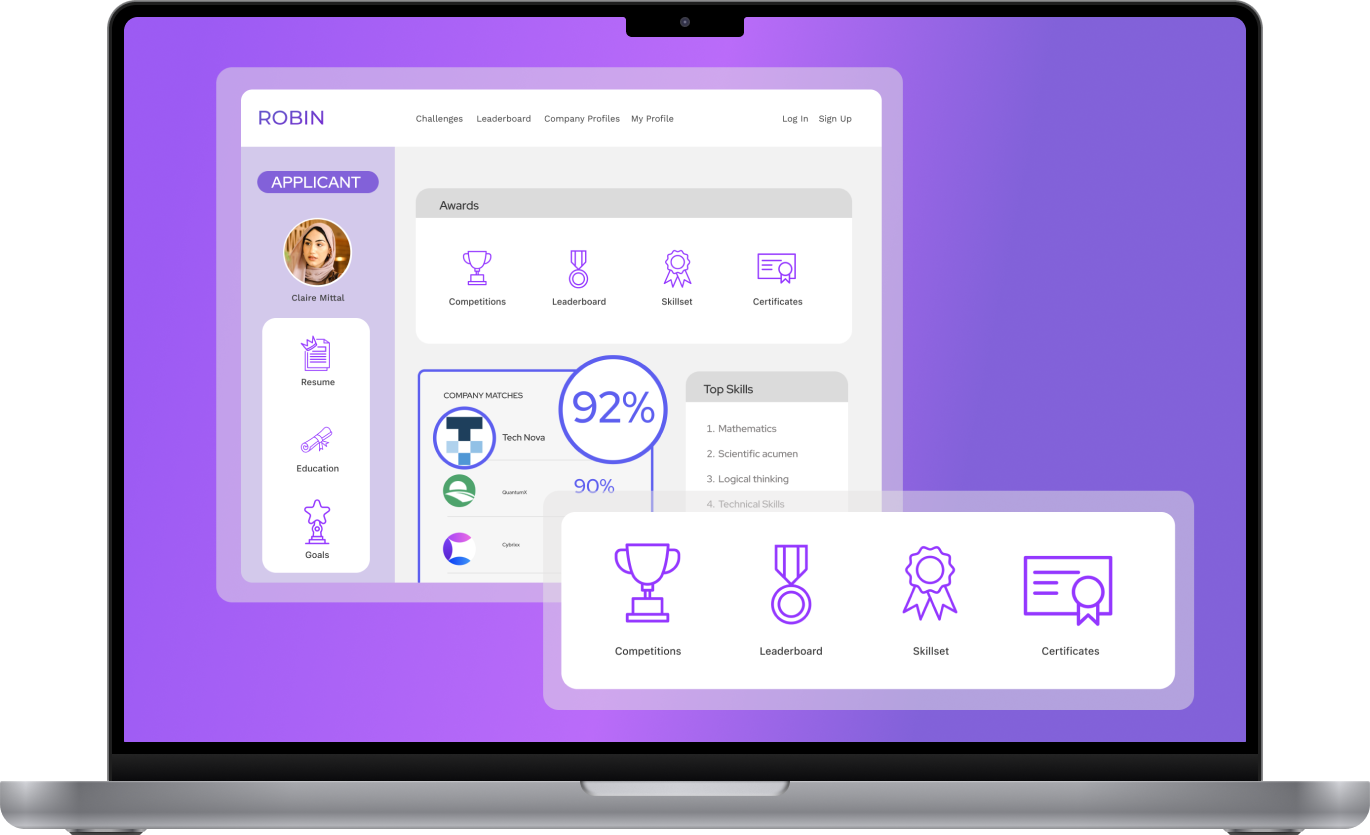
Visualize achievements, certifications, and competition results to create richer candidate profiles. Gamified icons and badges to enhance practical assessments, giving users a sense of achievement.
Challenge Boards
Encourage continued engagement while providing recruiters with additional signals of technical ability.
Company Profiles
Help applicants evaluate employers—not just the other way around.
Design System
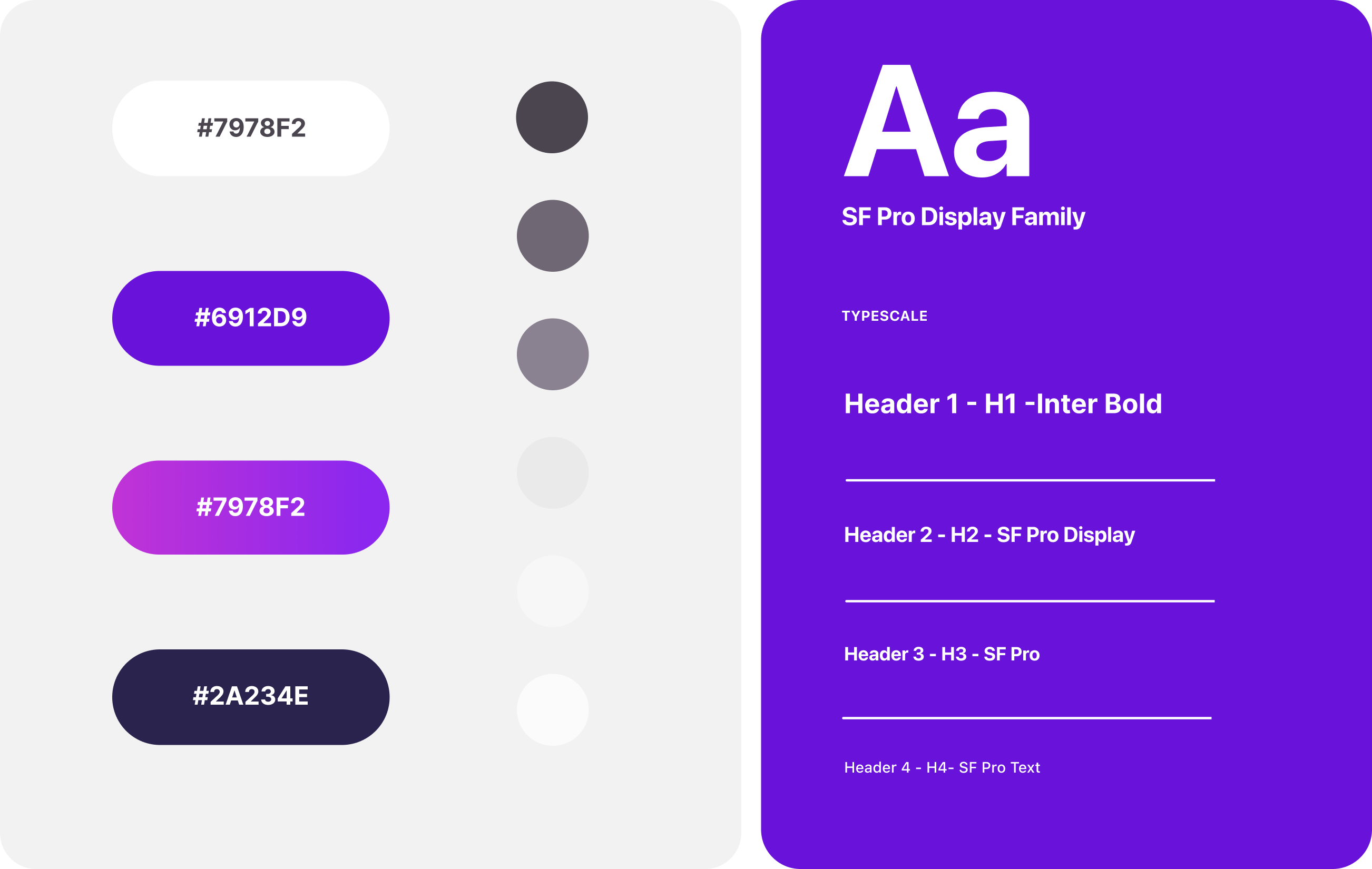
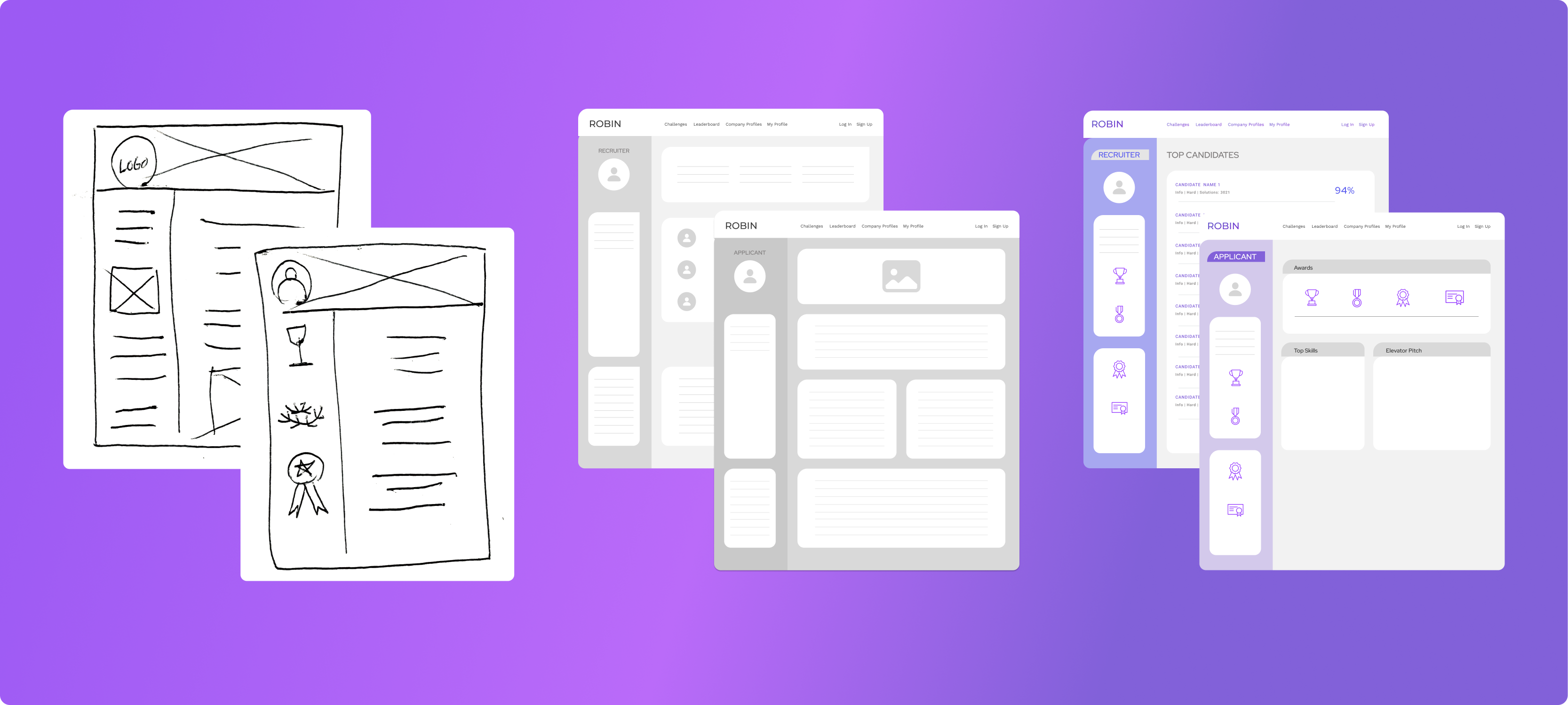
To maintain consistency across applicant, recruiter, and company experiences, I established a reusable component library including navigation, cards, assessment modules, achievement patterns, and profile layouts.
This accelerated iteration during the eight-week engagement while ensuring consistency across evolving product flows.
Product Strategy
From credential-first to capability-first shifted the problem definition.
Research shifted the problem definition. Rather than optimizing another job board, Robin focused on helping engineers demonstrate capability through measurable, skill-based interactions.
Three strategic principles guided the product:
• Demonstrate skills instead of resumes
• Reward participation through meaningful progression
• Increase confidence for both recruiters and applicants
Product Strategy
Research shifted the problem definition.
Rather than optimizing another job board, Robin focused on helping engineers demonstrate capability through measurable skill-based interactions.
Three strategic principles guided the product:
• Demonstrate skills instead of resumes
• Reward participation through meaningful progression
• Increase confidence for both recruiters and applicants
Applied Through Design
Evaluation Speed
Reduce recruiter evaluation time by surfacing validated
skill signals before the interview stage.
Visible Progress
Make progress visible to candidates throughout
assessments, competitions, and profile growth.
Product Decisions
Four decisions shaped the experience
Several concepts were explored before converging on a skill-first hiring model that combined practical assessments, skill visualization, recruiter matching, and gamified progression.
Practical Assessments
Transforming practical assessments through strategic design decisions was pivotal in creating gamified icons and achievement badges and bringing a new dimension to the evaluation process.
Skills Profiles
Tech applicants can showcase their practical skills and talents through user profiles and leadership boards. Users participate in challenges, and winners receive job offers or prize awards. Challenges are recommended to users based on their skill sets.
Challenge Boards
I crafted engaging gamified icons and achievement badges to transform the evaluation process by giving users a sense of achievement in the practical assessments.


Company Profiles
Engineer profiles emphasize skill enhancement, utilizing a Points Challenge Board demonstrating user Achievements and Badges to create a dynamic and rewarding atmosphere.
Design System
To maintain consistency across the applicant, recruiter, and company experiences, I established a reusable component library. This accelerated iteration during the eight-week engagement while keeping evolving product flows visually consistent.
Gamified Icons
I crafted engaging gamified icons and achievement badges to transform the evaluation process by giving users a sense of achievement in the practical assessments.
Achievement Badges
Engineer profiles emphasize skill enhancement, utilizing a Points Challenge Board demonstrating user Achievements and Badges to create a dynamic and rewarding atmosphere.
Practical Assessments
Transforming practical assessments through strategic design decisions was pivotal in creating gamified icons and achievement badges and bringing a new dimension to the evaluation process.
Points Challenge Board
Tech applicants can showcase their practical skills and talents through user profiles and leadership boards. Users participate in challenges, and winners receive job offers or prize awards. Challenges are recommended to users based on their skill sets.
Matching
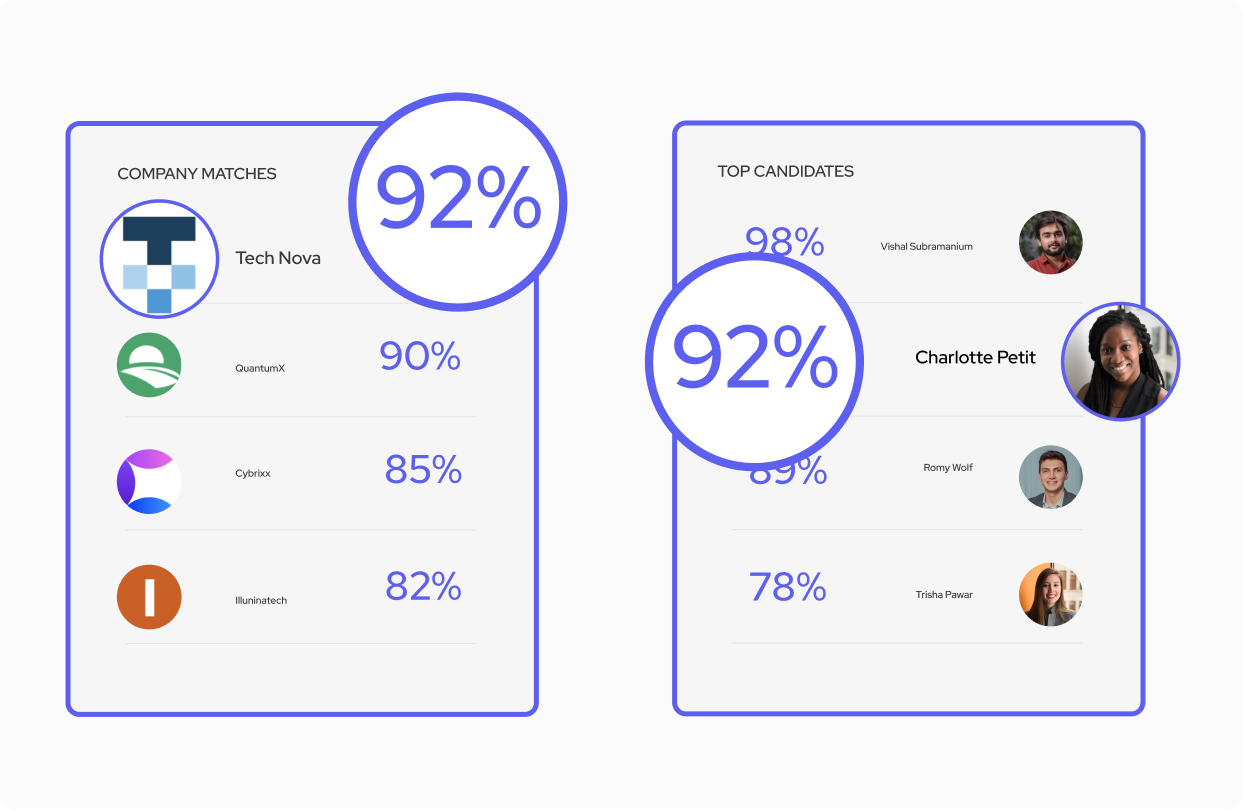
I highlighted the user's accomplishments in the User Profile. Focus on skillsets & leader board, displaying the competitions they already won.

Prototype Highlights
Validated through a clickable,high-fidelity prototype
Concept validated through a clickable, high-fidelity prototype covering the full applicant-to-recruiter loop: applicant profile, company profile, assessment exploration, and assessment detail screens.
Two rounds of usability testing surfaced friction in the matching flow, which shaped the final Company Profile and Points Challenge Board designs.
Expected Product Impact
Although this was a concept project, the proposed solution was designed to:
• Reduce recruiter screening effort
• Improve candidate visibility
• Encourage ongoing participation through assessments
• Strengthen matching quality using demonstrated skills
Company Profiles help applicants evaluate employers—not just the other way around.
Reflection
This project reinforced that successful hiring platforms require balancing recruiter efficiency with candidate motivation — and that gamification cuts both ways.
Done well, it turns a flat evaluation process into something applicants actually want to engage with. Done carelessly, the badges and points become the point, and the skills they're meant to represent fade into the background.
If continuing the product, I would prioritize:
• Validating engagement through usability testing
• Measuring recruiter adoption
• Exploring recommendation algorithms for assessment matching
• Evaluating long-term effectiveness of gamification
Prototype & Validation
Validated through a clickable, high-fidelity prototype
Done well, it turns a flat evaluation process into something applicants actually want to engage with. Done carelessly, the badges and points become the point, and the skills they're meant to represent fade into the background.
If continuing the product, I would prioritize:
• Validating engagement through usability testing
• Measuring recruiter adoption
• Exploring recommendation algorithms for assessment matching
• Evaluating long-term effectiveness of gamification

